Introduction: Deploying high-concurrency applications in Cambodia requires balancing latency, bandwidth, and cost control. This article focuses on “high-concurrency scenarios” Cambodia VPS It expands on “Recommendations and Best Practices for Load Balancing,” providing architecture and operation key points for localized deployment to facilitate SEO and GEO optimization.
Choosing a data center located in Phnom Penh or nearby areas can significantly reduce user latency. Evaluate network exits, bandwidth peaks, and peering connections, giving priority to nodes with significant international bandwidth and low packet loss rates to ensure network stability under high concurrency.
In high-concurrency environments, it is recommended to allocate CPU, memory, and I/O resources based on the type of business. Compute-intensive requests require more CPU and faster single-core performance, while I/O-sensitive services prioritize SSDs and network throughput, with appropriate buffer allocation for bursty traffic.
Build multi-availability zone or multi-instance redundancy, and adopt a stateless application design to simplify scaling. Automatically switch instances through health checks to ensure that single points of failure do not affect overall services, thereby improving availability and recovery speed.
In the Cambodian VPS scenario, a trade-off can be made between Layer 4 (L4) and Layer 7 (L7) load balancing based on requirements. L4 is more efficient with lower latency ; L7 facilitates content-based routing and circuit breaking; used together, they balance performance and flexibility.
Try to use a stateless design or centralized session storage (such as Redis) to avoid scalability bottlenecks caused by sticky sessions. If viscosity must be used, the session persistence mechanism and failover capability of the load balancer should be evaluated.
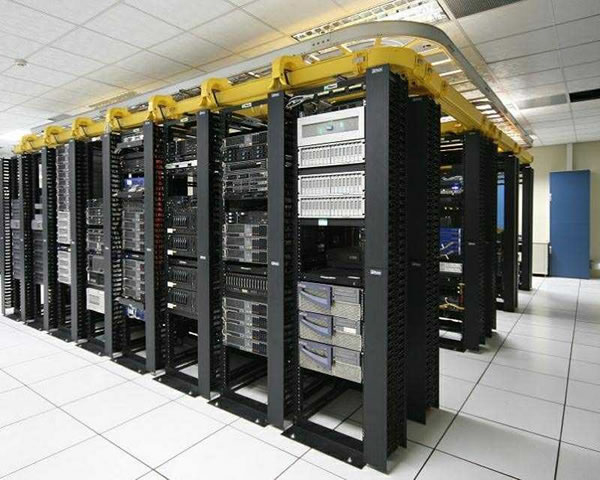
Proper use of edge caching and in-app caching can significantly reduce the load on the origin server. By leveraging local or regional CDN nodes, it accelerates the distribution of static resources, reduces bandwidth usage, improves the user experience, and lowers peak load.
Databases are a common bottleneck under high concurrency. Using master-slave replication, read-write separation, and sharding strategies can improve read and write throughput. Be sure to pay attention to the impact of network latency on replication latency, and optimize slow queries and index design.
Establish a comprehensive monitoring and alerting system that covers key metrics such as CPU, memory, network, latency, and error rates. Scale out on demand using auto-scaling strategies to ensure rapid allocation and recycling of resources during sudden traffic spikes.
Security cannot be ignored in high-concurrency environments. Deploy WAF, DDoS protection, and access control lists, and establish data encryption and backup strategies. At the same time, local regulations and privacy compliance requirements are followed to ensure the security of user data.
Using Infrastructure as Code (IaC) and containerized deployment can improve deployment consistency and recovery speed. Automation scripts and CI/CD processes reduce human errors, ensuring rapid iteration and stable delivery in the Cambodian VPS environment.
To improve local search performance in Cambodia, it is essential to prioritize deployment on local servers, along with the use of localized domain names, structured data, and page speed optimization. By combining server response time monitoring, continuously optimize the user experience and search visibility.
Summary: For “Recommendations for Cambodian VPS in High-Concurrency Scenarios and Best Practices for Load Balancing,” it is recommended to make an overall plan from seven aspects: network, VPS specifications, load balancing, caching, database, monitoring, and security. Through stateless design, auto-scaling, and localized deployment, low-latency, highly available, and scalable production systems can be implemented in the Cambodian environment.
- Latest articles
- Popular tags
-

Market Development Prospects Of Cambodia's Cloud Servers In Southeast Asia
Explore the market development prospects of Cambodia's cloud servers in Southeast Asia, including market potential, technical trends, competitive analysis, etc. -

Evaluate How Much A Cloud Server In Cambodia Costs On A Monthly And Annual Basis, Which Is More Suitable For Long-term Planning
compare the cost and value of cloud servers in cambodia from the perspective of monthly and annual billing, analyze discounts, cash flow, performance, bandwidth and hidden costs, and provide a decision-making framework and suggestions suitable for long-term planning. -

The Most Cost-effective Cambodia Vps Recommended Package Is Suitable For Small And Medium-sized Enterprises
this cambodia vps purchasing guide for small and medium-sized enterprises analyzes the key points of recommended vps packages with the highest cost performance, including bandwidth, latency, hardware, scalability, operation and maintenance support, etc., and provides practical purchase and migration suggestions.